
Why they can't go in the bin
Anything with a plug, a battery or a charging port is waste electrical and electronic equipment, and that includes cables, chargers, power bricks, adaptors and extension leads. WEEE is a regulated stream and general waste is not a legal route for it.
The reason is partly value. Cable is copper wrapped in plastic, and copper is the most valuable common recyclable metal there is. A drawer of cables is genuinely worth recovering rather than burying.
The other reason is hazard. Anything containing a lithium cell — a power bank, a cordless tool battery, a vape — starts fires when crushed in a bin lorry, and those fires are frequent enough that waste operators treat them as a leading cause of vehicle and facility fires.
- Chargers and cables are WEEE
- Copper inside is genuinely valuable
- Plastics and metals both recoverable
- Battery packs are a fire risk
- Retailers must take them back
- Recycling centres have WEEE points
Where to take them
Recycling centres all have a WEEE point and take small electricals free from residents with proof of address. It is the simplest route for a boxful.
Retailers selling electricals have take-back obligations. Larger stores generally accept small items like cables and chargers regardless of where you bought them, and many supermarkets and phone shops have collection bins near the entrance.
Some councils also run small-electricals kerbside collections or accept them alongside batteries. It is worth checking your own council's list, because provision varies more than people expect between neighbouring authorities.
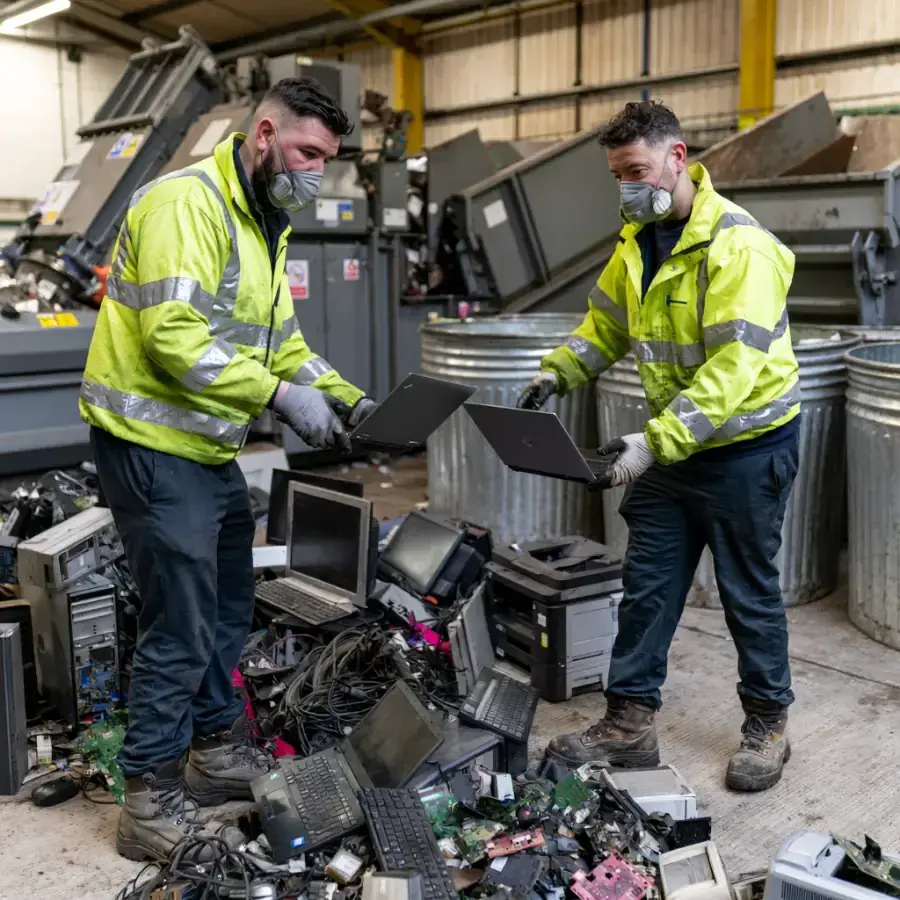
Cupboard of redundant IT?
Cables, screens and kit taken under WEEE rules, with data-bearing drives handled properly.
The ones worth keeping
Before the whole drawer goes, a few are genuinely worth retaining. A good USB-C power delivery brick of 60W or more will charge almost anything modern and is worth more than the cable it came with. One or two decent quality USB-C cables likewise.
Keep any charger that belongs to something you still own — laptops, cordless tools, cameras and e-bikes generally use proprietary supplies that are annoying and expensive to replace.
Everything else — the mini-USB, the barrel-jack bricks for devices you no longer have, the tangle of unidentifiable leads, the phone chargers for handsets three generations gone — has no future use and is only occupying a drawer.
When it's more than a drawer
Offices, schools and workshops accumulate cables and IT at a scale where a carrier box is not the answer. A cupboard of redundant leads, monitors, printers, phones and network kit is a WEEE collection.
Data matters at that scale. Anything that stored data — computers, phones, printers with memory, network appliances — should be wiped or the drive destroyed before it leaves the building, and it is worth having that in writing.
We collect WEEE across Scotland with a duty of care (your legal responsibility for waste you produce) transfer note under our SEPA registration (WCR/R/3002381), and the metal content including cable copper goes into recovery rather than a mixed load. See WEEE disposal and office clearance.
