
SEPA registered waste carrier · WCR/R/3002381  —  Unlicensed carriers can leave you liable for fines of up to £5,000. Always check before you book.Fly-tipping fines up to £5,000. We are SEPA registered.
Dumpit Scotland
Home

Services

All servicesRubbish RemovalMan Van Rubbish RemovalSkip Hire AlternativeSame Day Rubbish RemovalBulky Waste CollectionGarden Rubbish ClearanceFurniture RemovalMattress RemovalAppliance RemovalWashing Machine RemovalFridge RemovalCarpet RemovalLoft ClearanceHot Tub RemovalGarage & Shed DemolitionHouse ClearanceGarage ClearanceStorage Unit ClearanceLandlord ClearanceVoid Property ClearanceFlat Tenement ClearanceBin Store Backcourt ClearanceStudent Flat ClearanceProbate House ClearanceHoarder ClearanceAirbnb Property ClearanceCommercial Waste CollectionOffice ClearanceConfidential Waste DisposalShop Retail ClearanceHotel Hospitality ClearancePub Restaurant ClearanceCommercial Kitchen RemovalSchool Nursery ClearanceCare Home ClearanceEvents Waste ManagementCaravan Holiday Park ClearanceLiquidation ClearanceSanitary Waste CollectionLaboratory Equipment DisposalIndustrial Waste RemovalWarehouse Factory ClearanceConstruction Site ClearanceSoft Strip OutBuilders Waste RemovalPlasterboard DisposalWEEE DisposalFly Tipping ClearanceWait & LoadScrap Metal CollectionFlood Damage ClearanceFire Smoke Damage ClearanceFarm Agricultural ClearanceVehicle Workshop ClearanceSoil RemovalConcrete RemovalConservatory RemovalArtificial Grass & DeckingOil Tank RemovalWater Tank RemovalKitchen RemovalBathroom RemovalGym Equipment RemovalMobility Equipment RemovalPiano RemovalSafe RemovalStairlift RemovalCarport RemovalSmall Tree RemovalTyre RemovalFence Removal

More

Areas we coverEvery town A–ZItems we takeGuidesAbout usContactPricing
Get an instant quote
Builders & trade waste · GlasgowUpdated August 20266 min read

Recycling Scrap Timber & Lumber in Glasgow

Timber is one of the better-recycled materials in the waste stream, but only if it is sorted. Mixed with the wrong thing, the whole load drops to landfill grade.

By The Dumpit Scotland team

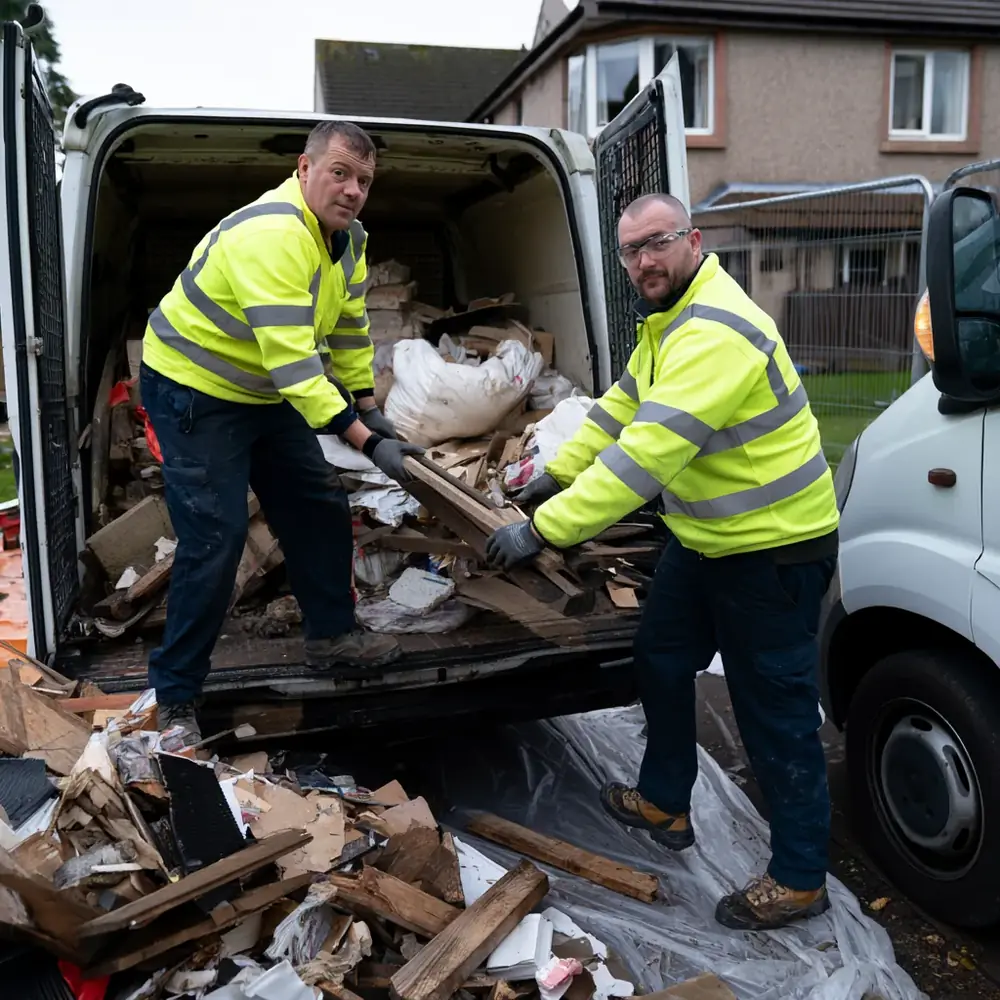
Scrap timber sorted for recycling on a site in Glasgow

The short answer

Clean untreated timber is, into panel board and animal bedding. Treated timber is restricted to licensed facilities and engineered boards like MDF usually go to energy recovery instead.

Pile of timber from a job?

Clean and treated separated properly, so the clean stuff actually gets recycled rather than dragged down with the rest.

The three grades that matter

Waste timber is graded, and the grade decides where it goes and what it is worth. Grade A is clean, untreated, unpainted wood — pallets, packing cases, joinery offcuts — and it goes into panel board manufacture and animal bedding.

Grade B is the general construction and demolition mix: some paint, some fixings, some board. Grade C is fuel grade and goes to biomass energy. Grade D is treated timber — creosote, copper-chrome-arsenic — and is restricted to specific licensed facilities.

The commercial reality worth knowing is that contamination is contagious. A few creosoted posts thrown in with clean joinery offcuts takes the whole load down a grade, which costs you money and wastes the good material.

  • Grade A — clean, untreated, reusable
  • Grade B — construction and demolition mix
  • Grade C — fuel-grade for biomass
  • Grade D — hazardous, treated, restricted
  • Sort at source, not after
  • One contaminated piece downgrades a load

Engineered boards are their own problem

MDF, chipboard, OSB and plywood are held together with adhesives, and those adhesives are why they cannot go into the clean timber stream. MDF in particular contains formaldehyde-based resins, and its dust is a recognised respiratory hazard — cut it with extraction and a mask, not in a closed room.

These boards generally go to energy recovery rather than material recycling. That is not nothing — it displaces fossil fuel — but it is a step down from becoming new board, and it is worth keeping them out of a clean load.

Old flat-pack furniture is almost entirely this material. It is bulky, it breaks down badly and it has essentially no reuse value once the fixings have been in and out twice.

Timber sorted into two piles?

That's the version that actually gets recycled. We keep clean and treated separate on the load.

Reuse beats recycling

Clean, sound timber has real value to somebody. Scaffold boards, joists, floorboards and decent lengths of studwork are all sought after, and reclaimed timber merchants across central Scotland will take them — sometimes buying, more often taking free.

Men's Sheds, community workshops, allotment associations and men's and women's groups get through a surprising amount of usable timber and are usually glad of it. Pallets in good condition are worth offering on local pages; broken ones are firewood or Grade B.

The practical rule: if you would use it, someone else will. If it is split, rotten, full of nails or has been outside for years, it is waste and the recycling stream is the right answer.

Getting it away

Household quantities of timber go to a recycling centre with a dedicated wood container. The usual constraints apply — residents, proof of address, van time windows — and treated timber is accepted at some sites and refused at others.

Trade quantities need a registered carrier. If the timber came out of paid work at a property it is trade waste whoever brings it, and household centres will refuse it — see our waste guidance for builders.

We collect timber across Scotland and separate it into clean and treated on the load, so the clean material actually reaches the stream it should. Priced by volume from £100 + VAT — that is builders waste removal.

Questions

Frequently asked questions

Clean untreated timber is, into panel board and animal bedding. Treated timber is restricted to licensed facilities and engineered boards like MDF usually go to energy recovery instead.

Contamination is contagious — a few creosoted posts in a load of clean joinery offcuts downgrades the whole thing, which costs money and wastes the good material.

Not into new board, generally. The adhesives rule them out of the clean stream, so they go to energy recovery. Keep them separate from clean timber.

It contains formaldehyde-based resins and the dust is a recognised respiratory hazard. Cut it with extraction and a mask, not in a closed room.

Reclaimed timber merchants, Men's Sheds, community workshops and allotment associations all take sound timber. Scaffold boards, joists and floorboards are genuinely sought after.

Household quantities, yes, with proof of address. Treated timber is accepted at some sites and refused at others, and trade quantities are refused everywhere.

Related

How we can help

Book a timber uplift

Tell us what needs cleared and we will reply with a fixed, no-obligation price. To share photos, use WhatsApp.

We reply within 60 minutes, 7 days a week.

4.9 from 272 Google reviews · SEPA registered since 2010

Instant quote Call now